
CyborGel® is a novel synthetic hydrogel cartilage implant engineered and designed for the treatment of progressive and post-traumatic Osteoarthritis.
The CyborGel® Biomimetic Implant System is a set of lubricous and durable hydrogel implants designed to be installed in the knee joint. It is designed to help support and replace the function of deteriorating cartilage and prevent painful bone-on-bone contact.
Our procedure is designed to:
⦾ Help provide quick and long lasting pain relief.
⦾ Be minimally invasive and support a rapid recovery period
⦾ Potentially Delay the clinical need for a Total Knee Replacement.


CyborGel® is a novel synthetic hydrogel cartilage implant system engineered and designed for the treatment of progressive and post-traumatic Osteoarthritis.
CyborGel® Implant System is a set of lubricous and durable hydrogel implants installed in the knee joint. It is designed to help support deteriorating cartilage and preventing painful bone-on-bone contact.
Our procedure is designed to:
⦾ Help provide quick and long lasting pain relief.
⦾ Be minimally invasive and designed to support a rapid recovery period, with the goal of enabling patients to walk unassisted the same day of installation.
⦾ Studied for its potential to delay the clinical need for a Total Knee Replacement.
Knee Osteoarthritis (OA) is a painful and progressive condition affecting an estimated 20 million Americans, with roughly 1 million new U.S. diagnoses each year. Many of the millions afflicted with this debilitating disease live with joint pain that is not yet severe enough to warrant a total joint replacement but goes well beyond what conservative measures like steroids and painkillers can adequately treat.
CyborGel® has been designed by surgeons for patients to fill this treatment gap and provide an early-intervention solution for early OA.
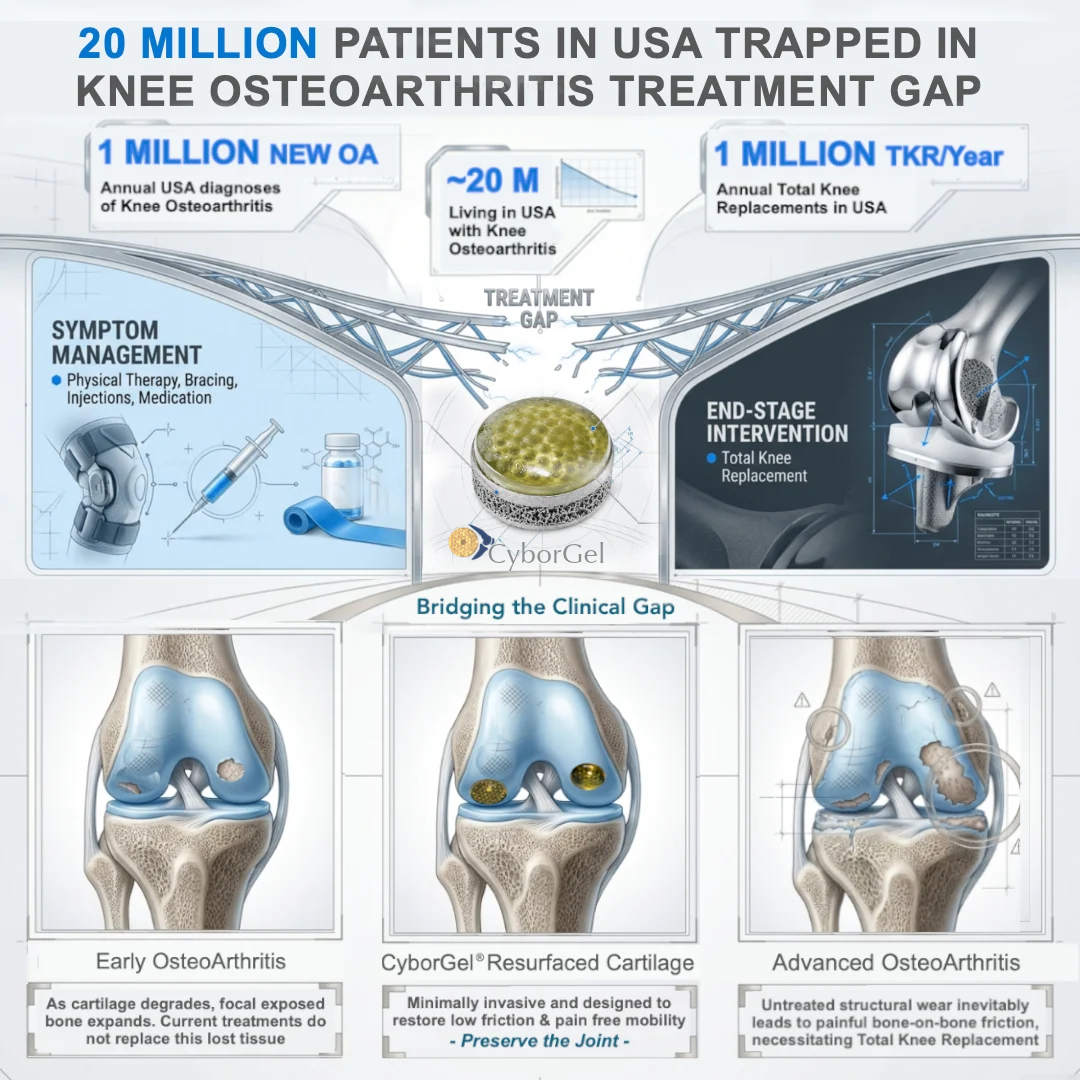
CyborGel® is a Novel Hydrogel Synthetic Cartilage Implant System designed to arthroscopically resurface focal cartilage defects in Knee OA early in the disease process, while preserving the remaining healthy joint, providing immediate pain relief, and preventing progression of knee OA, thereby delaying the need for a Total Knee Replacement.
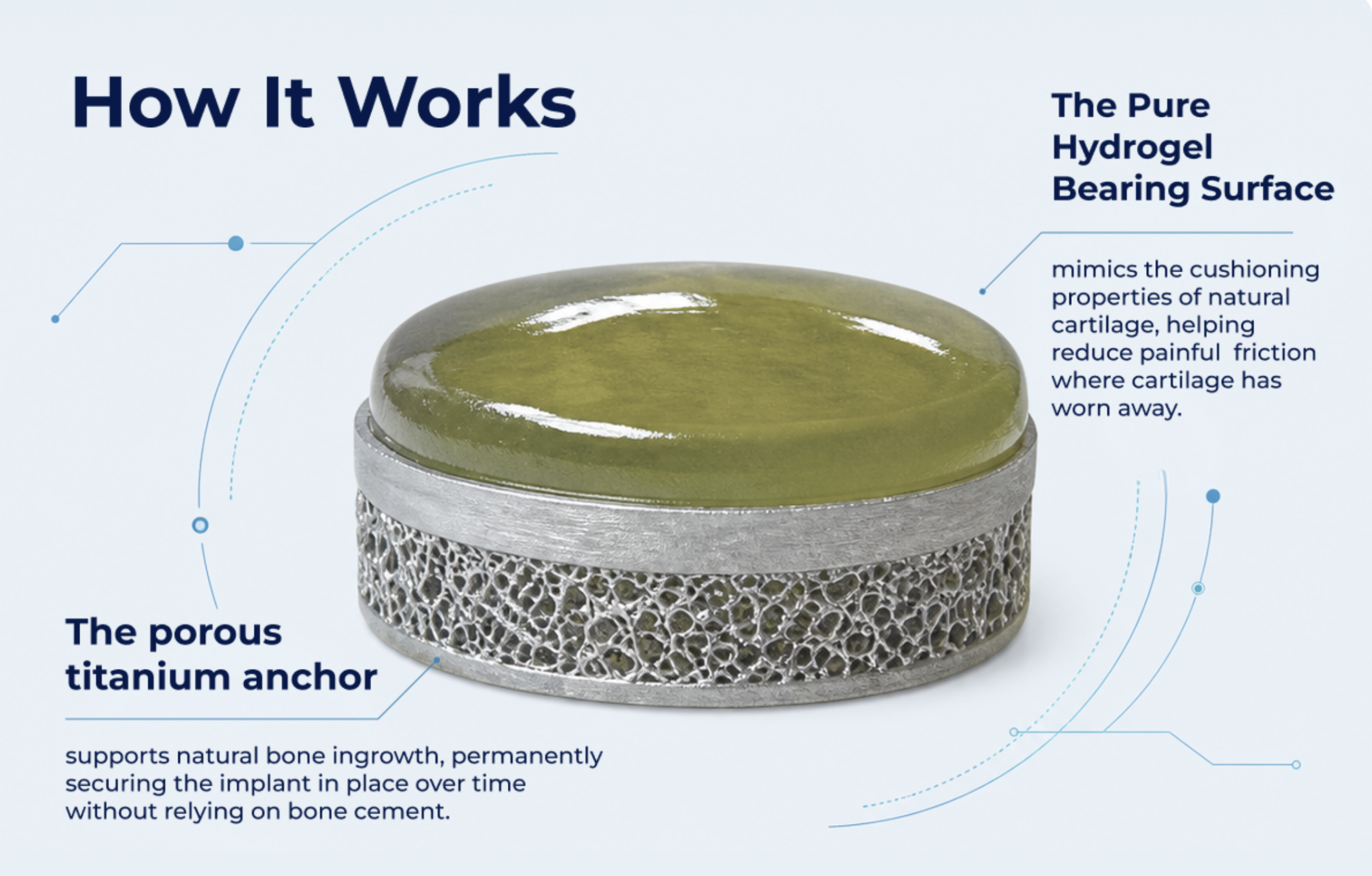
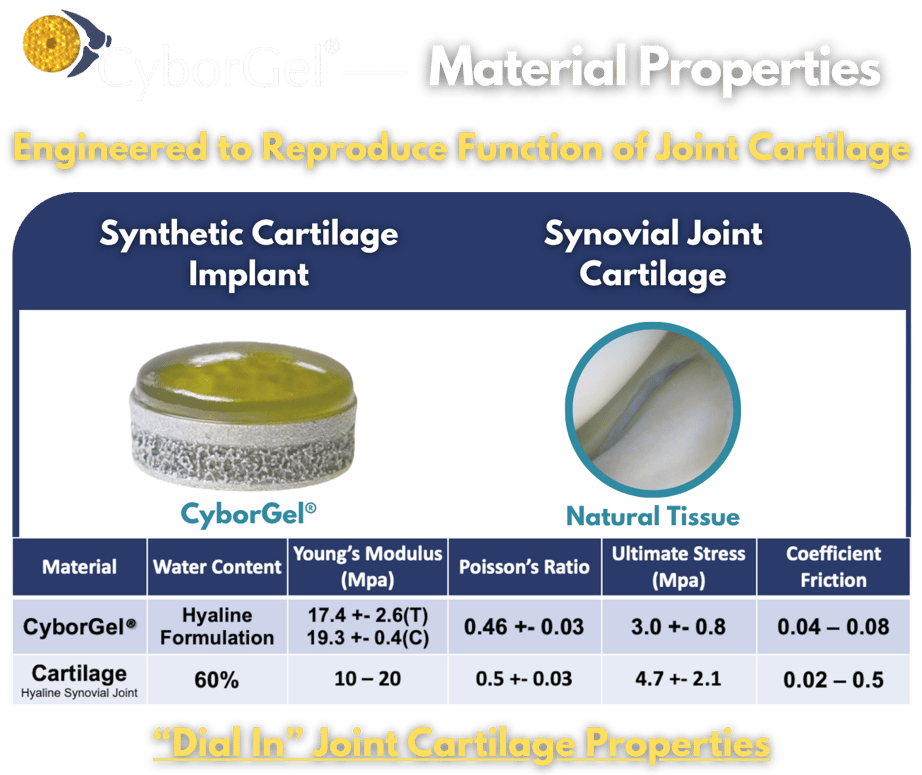
Our durable hydrogel has been engineered to reproduce the structure, microanatomy, and performance of natural joint cartilage and is being investigated for its potential to be used as a replacement of irreversibly damaged cartilage in synovial joints, such as the knee.
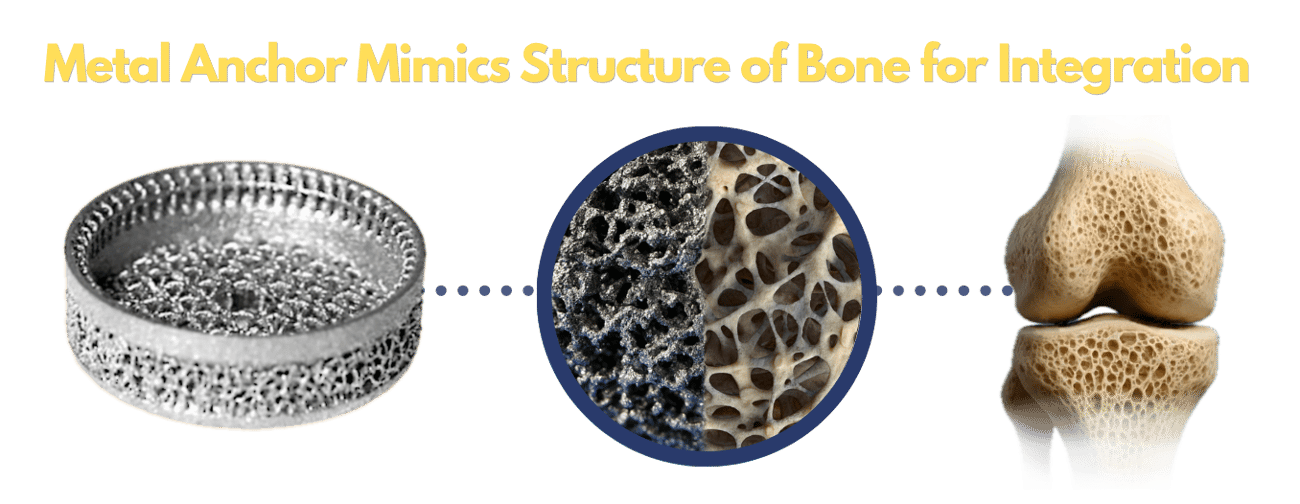
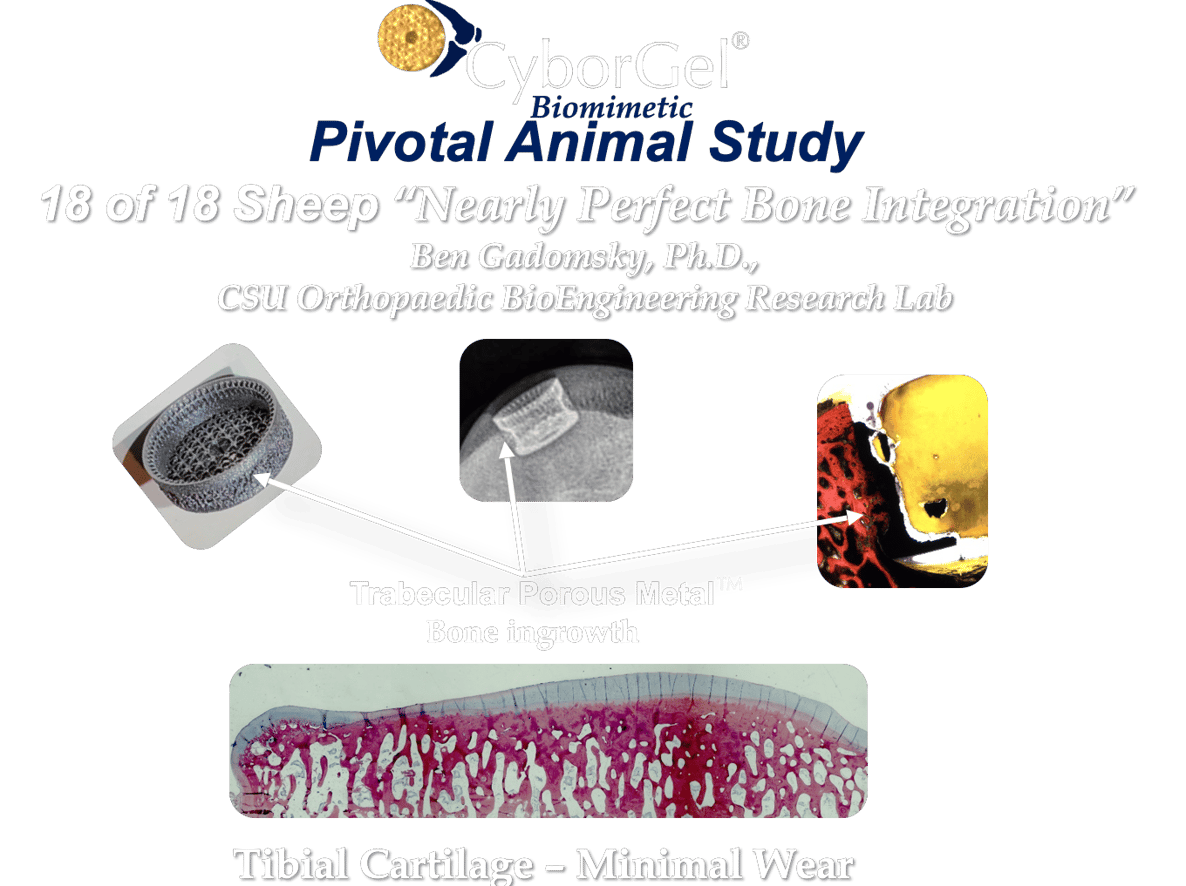
CyborGel® utilizes a 3D printed Trabecular Porous Metal (TPM)™ anchor that is designed to hold the hydrogel and mimic the porous architecture of natural bone to promote osseointegration, securing the implant with naturally occurring bone in-growth.
An independent 1 year Pivotal study at Colorado State University, demonstrated the implant “produced high quality integration between the device and surrounding native bone in 18 of 18 sheep, and provided a cartilage bearing surface capable of remaining in the joint space for a minimum of 52 weeks without demonstrating wear.”
The CyborGel® Implantation technique has been developed alongside and contributed to innovations in Arthroscopy and Resurfacing Implants to hone a minimally invasive surgical implantation technique. The implant and installation technique are designed to support precise and consistent implantation, stable bone healing fixation, and an accelerated recovery period (minimally invasive surgery) with the goal of providing clinical longevity.
Arthroscopic procedure is designed to be minimally invasive
for potential Walk Away Recovery
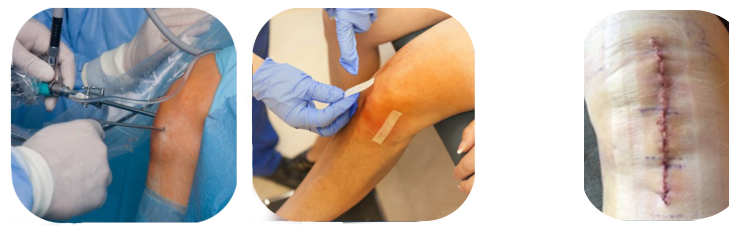
preserve the joint.
Designed for seamless OR integration, CyborGel's single-step press-fit delivery requires minimal instrumentation. BC Surgeons demonstrated an immediate learning curve in a cadaveric model, reducing implantation times to as little as 4 min: 10 sec by their third use.

How long does synthetic biomimetic cartilage last?
While CyborGel has not been tested in humans, results of our rigorous testing at Colorado State University are optimistic toward clinical longevity. Across successful Animal Studies, Wear, Failure Mode and comprehensive Bio-compatability testing, CyborGel’s durability and consistent integration with naturally occurring bone indicated a potentially viable, early-intervention solution to Knee OA. While transplanted cartilage (mosaicplasty) is subject to the same progressive disease degeneration, CyborGel's Independent Exponent testing completed 10M walking cycles without any progressive wear (equating to ten years of average joint use). While preclinical trials are not a guarantee for performance in human joints, this indicates a potential viability for CyborGel providing a 10+ year solution to Knee OA.

*GLP Mode I Knee Simulated Tribology:
CyborGel Synthetic Cartilage hits 10M cycles with no progressive wear.

CyborGel® has received FDA “Breakthrough Device Designation” and, using FDA approved protocols, demonstrated successful Animal Studies, Wear, Failure Mode and comprehensive Bio-compatability testing. Formae is now focused on the final FDA independent testing necessary for authorization to launch human clinical trials.
Formae plans to develop additional CyborGel® configurations for more advanced knee conditions and potential applications in other synovial joints.
*CyborGel®'s safety and effectiveness in humans have not been established. Favorable preclinical results do not guarantee favorable results in human clinical studies.


Knee Osteoarthritis (OA) is a painful and progressive condition affecting an estimated 20 million Americans, with roughly 1 million new U.S. diagnoses each year. Many of the millions afflicted with this debilitating disease live with joint pain that is not yet severe enough to warrant a total joint replacement but goes well beyond what conservative measures like steroids and painkillers can adequately treat.
CyborGel® has been designed by surgeons for patients to fill this treatment gap and provide an early-intervention solution for early OA.
CyborGel® is a Novel Hydrogel Synthetic Cartilage Implant System designed to arthroscopically resurface focal cartilage defects in Knee OA early in the disease process, while preserving the remaining healthy joint, providing immediate pain relief, and preventing progression of knee OA, thereby delaying the need for a Total Knee Replacement.
Our durable hydrogel has been engineered to reproduce the structure, microanatomy, and performance of natural joint cartilage and is being investigated for its potential to be used as a replacement of irreversibly damaged cartilage in synovial joints, such as the knee.
CyborGel® utilizes a 3D printed Trabecular Porous Metal (TPM)™ anchor that is designed to hold the hydrogel and mimic the porous architecture of natural bone to promote osseointegration, securing the implant with naturally occurring bone in-growth.
An independent 1 year Pivotal study at Colorado State University, demonstrated the implant “produced high quality integration between the device and surrounding native bone in 18 of 18 sheep, and provided a cartilage bearing surface capable of remaining in the joint space for a minimum of 52 weeks without demonstrating wear.”
CyborGel® Implantation technique has been developed alongside and contributed to innovations in Arthroscopy and Resurfacing Implants to hone a minimally invasive surgical implantation technique that promotes precise and consistent implantation, stable bone healing fixation, an accelerated recovery period (walk-away recovery), and clinical longevity.
Arthroscopic procedure is designed to be minimally invasive
for potential Walk Away Recovery
preserve the joint.
Designed for seamless OR integration, CyborGel's single-step press-fit delivery requires minimal instrumentation. BC Surgeons demonstrated an immediate learning curve in a cadaveric model, reducing implantation times to as little as 4 min: 10 sec by their third use.

How long does synthetic biomimetic cartilage last?
While CyborGel has not been tested in humans, results of our rigorous testing at Colorado State University are very optimistic towards CyborGel’s durability and integration with naturally occurring bone. Independent Exponent testing completed 10M walking cycles without discernible wear (equating to ten years of average joint use). While preclinical trials are not a guarantee for performance in human joints, this durable implant system is being studied for its promising potential as a long-term solution to progressive OA degeneration.

*GLP Mode I Knee Simulated Tribology:
CyborGel Synthetic Cartilage hits 10M cycles with no progressive wear.
While transplanted cartilage (mosaicplasty) is subject to the same progressive disease degeneration—and thus only delays a Total Knee Replacement—CyborGel has withstood over 10M cycles (and counting) without progressive wear. The average person walks 1M cycles in a year.
This indicates a potential viability for CyborGel providing a 10+ year solution to Knee OA.
While CyborGel®'s safety and effectiveness in humans have not been established, and favorable preclinical results do not guarantee favorable results in human clinical studies, CyborGel is being studied as a potential long-term solution to Osteoarthritis of the knee and to help delay the clinical need for a Total Knee Replacement.
Formae plans to develop additional CyborGel® configurations for more advanced knee conditions and potential applications in other synovial joints.
Using FDA approved protocols, CyborGel® demonstrated successful Animal Studies, Wear, Failure Mode and comprehensive Bio-compatability testing. CyborGel® has received FDA “Breakthrough Device Designation”. Formae is now focused on the final FDA independent testing necessary for authorization to launch human clinical trials.


