Everyone experiences knee pain differently. One day it’s a dull ache after a run; the next, it’s a sharp pain when you stand up. Is it just a sprain? Is it arthritis? Or is it something structural like a meniscus tear?
Getting an accurate diagnosis is the most critical step in your recovery. Without knowing exactly what is wrong, you can’t know how to fix it. This guide takes you through the diagnostic journey, explaining the specific questions doctors ask and the advanced imaging they order to pinpoint the root cause of your discomfort.

Table of Contents
-
The Medical History: The Detective Work
-
The Physical Exam: Hands-On Testing
-
Imaging Studies: Seeing Inside the Joint
-
The "Invasive" Tests: Rare but Necessary
-
Next Steps
1. The Medical History: The Detective Work
Before your doctor ever touches your knee, they need to understand the story behind the pain. This "subjective" exam often gives them 80% of the clues they need to form a diagnosis. Be ready to answer specific questions:
-
The When: Did the pain start suddenly after a specific movement (like a twist or fall), or did it come on gradually over weeks?
-
The Where: Can you point to the pain with one finger, or is it a general ache? Pain on the inside of the knee often suggests a meniscus or MCL issue, while front knee pain often points to the kneecap.

-
The What: Does your knee feel unstable, like it's going to give out? Do you hear popping, clicking, or grinding sounds?
-
The Timing: Is the pain worse in the morning (common with arthritis) or after activity (common with tendonitis)?
2. The Physical Exam: Hands-On Testing
 Designed by FreePik
Once your doctor has the background, they will perform a physical exam to test the mechanical integrity of your joint. This typically involves three phases:
-
Inspection and Palpation: First, they will check for swelling (fluid inside the joint or bursitis), temperature (warmth can indicate inflammation or infection), and tenderness by pressing on specific landmarks like the joint line.
-
Range of Motion: Your doctor will gently bend and straighten your leg. If your knee "locks" and can't straighten fully, it might indicate a meniscus tear. If it can't bend fully, swelling might be blocking the joint.
-
Special Orthopedic Tests: These isolate specific structures within the knee to check for damage.
-
The Lachman Test: The doctor stabilizes your thigh and pulls your shin forward. Too much movement is the classic sign of an ACL tear.
-
The Posterior Drawer Test: This is the counterpart to the Lachman test. The doctor bends your knee to 90 degrees and pushes the shin backward to check for a PCL tear.
-
Valgus/Varus Stress Tests: By gently pushing your knee inward and outward, the doctor tests the stability of the collateral ligaments (MCL and LCL) that run along the sides of your knee.
-
The McMurray Test: Your doctor rotates your knee while bending and straightening it. A distinct "click" or pain along the joint line often signals a meniscus tear.
-
The Thessaly Test: A functional test where you stand on one leg and twist your body side-to-side. This mimics real-world movement to catch meniscus tears that lying-down tests might miss.
-
The Patellar Apprehension Test: To check for kneecap instability, the doctor gently pushes your kneecap to the side. If you instinctively tense up or feel like it will pop out, it suggests a history of dislocation.
3. Imaging Studies: Seeing Inside the Joint
If the physical exam raises red flags, your doctor will order imaging to confirm the diagnosis.
-
X-Rays (The First Line of Defense): Almost every knee workup starts here. They are excellent at showing bone problems like fractures, bone spurs, and the narrowing of joint space—the hallmark sign of Osteoarthritis. However, they miss soft tissues.

-
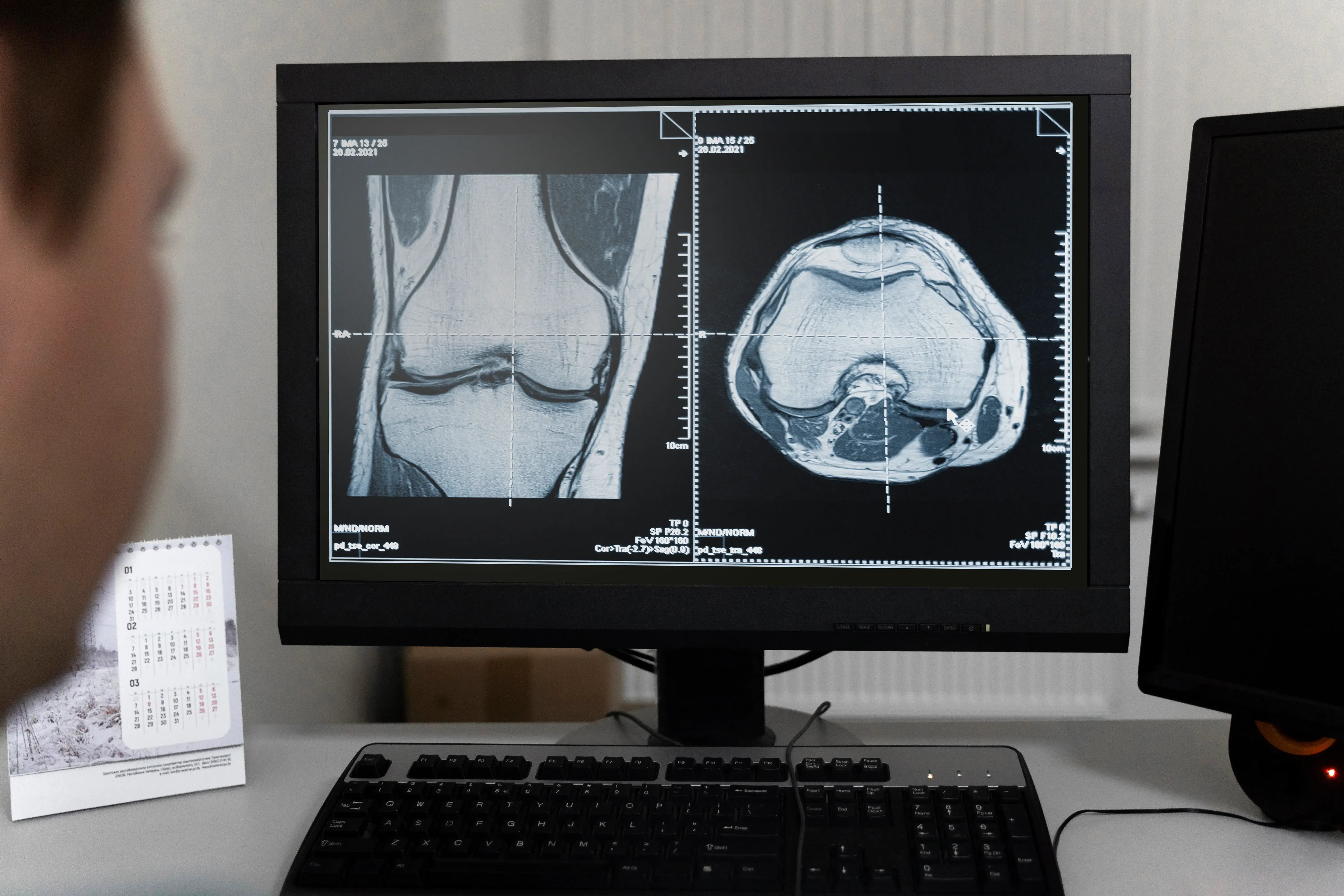
MRI (The Gold Standard): If X-rays look normal but pain persists, an MRI is the next step. This provides detailed 3D images of soft tissues, making it the only definitive way to diagnose ACL tears, meniscus tears, and cartilage damage.
-
Ultrasound and CT Scans: Ultrasound is often used to visualize tendons in real-time, while CT scans provide high-detail views of bone geometry for complex fractures.
 Designed by FreePik
4. The "Invasive" Tests: Rare but Necessary
In specific cases where imaging isn't enough, your specialist may recommend further testing:
-
Arthrocentesis (Joint Aspiration): If your knee is very swollen, a doctor may use a needle to drain fluid. This relieves pain and allows them to test the fluid for infection or gout.
-
Blood Tests: These are used to rule out systemic conditions that cause joint pain, such as Rheumatoid Arthritis or Lyme disease.
- Diagnostic Arthroscopy: This is a surgical procedure where a tiny camera is inserted into the joint. It is often used when an MRI is inconclusive or to verify the extent of damage before a larger surgery.
5. Next Steps
Diagnosing knee pain is a process of elimination. It starts with your story, moves to a physical check of your knees, and finishes with high-tech imaging to confirm the damage.
If you are currently suffering from undiagnosed knee pain, don't just "wait and see." A proper diagnosis is the only way to ensure you are treating the root cause, not just the symptoms. Once you have your diagnosis, understanding your treatment options is key. Read our Ultimate Guide to Understanding and Treating Knee Pain for a full breakdown of what comes next.